

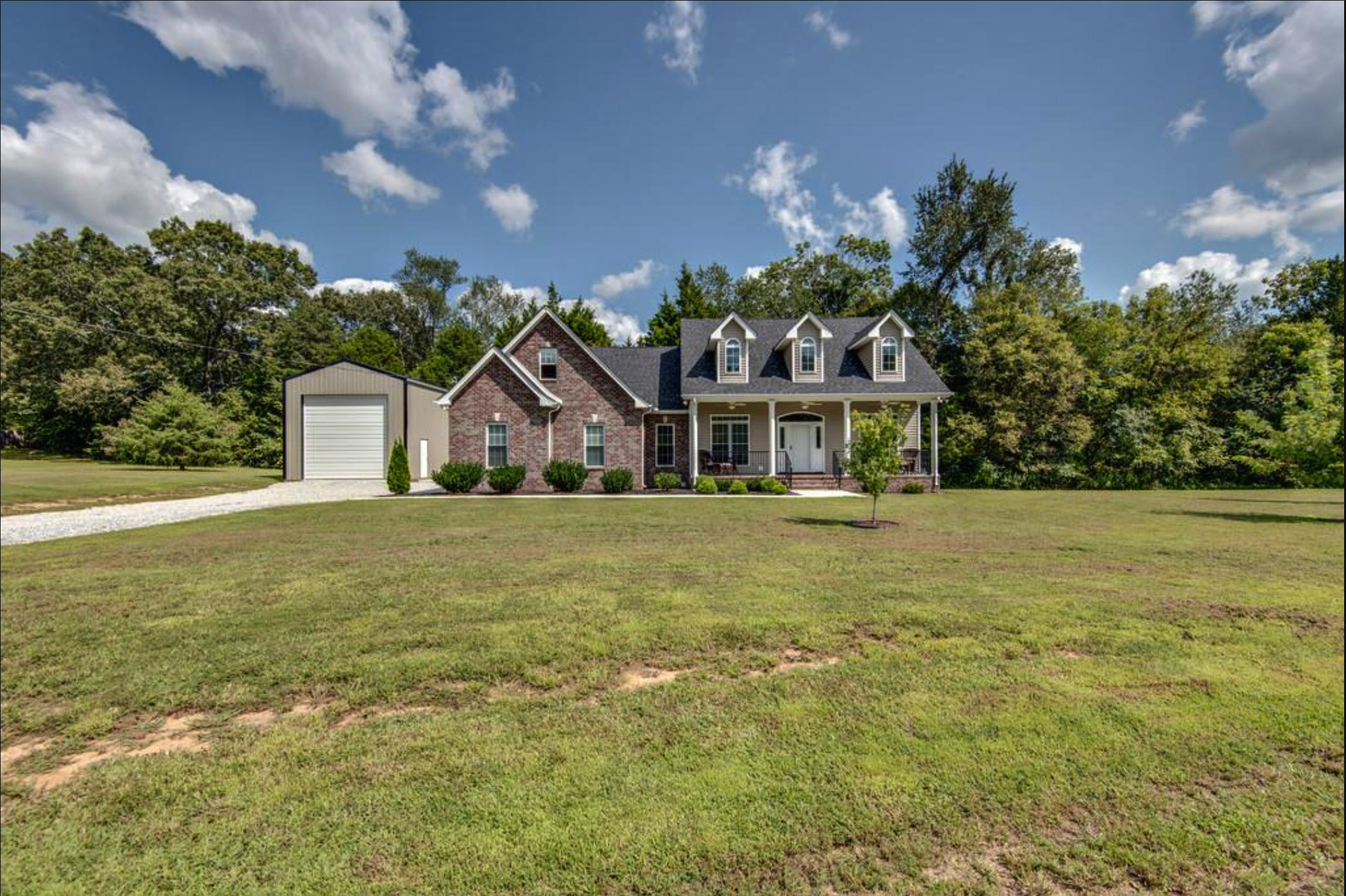
When people hear the phrase “quality construction,” they often think about finishes—beautiful cabinets, nice flooring, or high-end countertops.
But some of the most important parts of a well-built home are the things you’ll never see once the walls are closed up. These behind-the-scenes details are what make a home comfortable, durable, efficient, and problem-free long after move-in day.
Here’s what quality construction really means when it comes to what’s behind the walls.
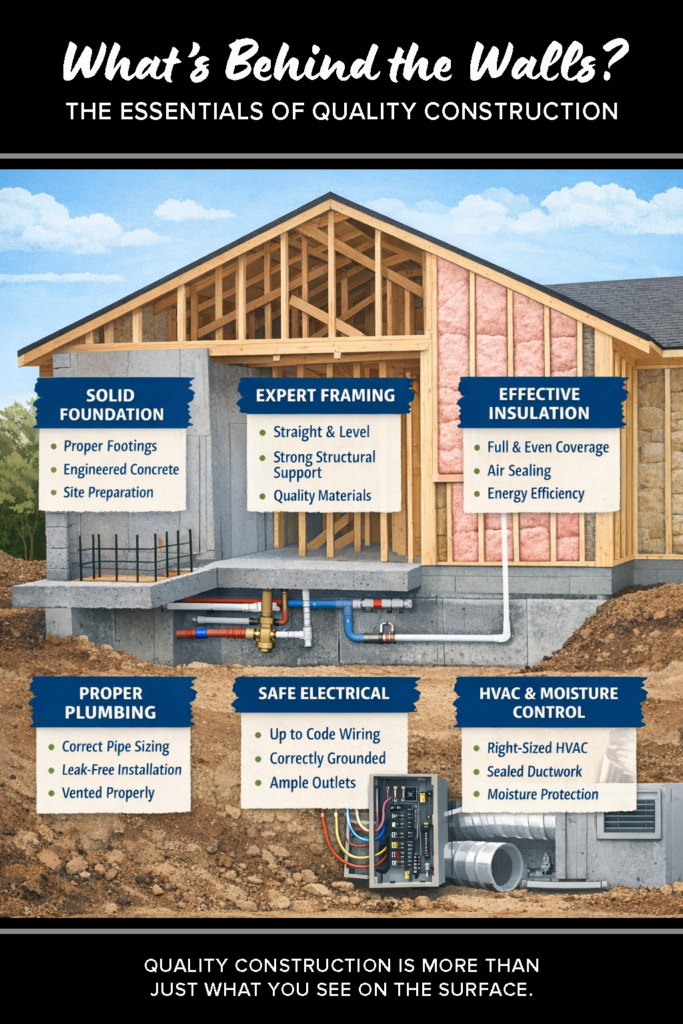
1. A Solid Foundation (Literally)
Quality construction starts from the ground up. Behind the scenes, that includes:
- Proper site prep and excavation
- Correct footing depth and reinforcement
- Concrete work that meets engineering requirements
A strong foundation helps prevent cracking, settling, and long-term structural issues.
2. Thoughtful Framing, Not Just Fast Framing
Framing isn’t just about getting the walls up—it’s about getting them right. Quality framing includes:
- Straight, square walls
- Proper spacing and fastening
- Structural support where it’s actually needed
Good framing makes everything that comes later—drywall, trim, cabinets—fit and function better.
3. Proper Insulation and Air Sealing
Insulation does more than keep your home warm or cool. Behind the walls, quality construction means:
- Insulation installed to full depth
- No gaps, compression, or missing areas
- Proper air sealing around penetrations
This directly affects comfort, energy efficiency, and utility bills.
4. Plumbing That’s Designed, Not Just Installed
Quality plumbing is planned with long-term performance in mind. That includes:
- Correct pipe sizing
- Thoughtful routing to reduce noise
- Proper venting
- Quality materials
Poor plumbing work can lead to pressure issues, leaks, and expensive repairs down the road.
5. Electrical Work That Prioritizes Safety and Function
Electrical systems are one of the most critical behind-the-wall components. Quality construction includes:
- Proper circuit planning
- Clean, organized wiring
- Correct grounding and protection
- Thoughtful outlet and switch placement
This improves safety and everyday usability—along with code compliance.
6. HVAC That’s Sized and Installed Correctly
A quality HVAC system isn’t just about the brand of equipment—it’s about the design. Behind the scenes, that means:
- Proper load calculations
- Correct duct sizing and sealing
- Balanced airflow throughout the home
- Proper cleaning at the end of construction to ensure the home has pure air
This impacts comfort, humidity control, and energy efficiency.
7. Moisture Management and Protection
Moisture is one of the biggest threats to a home. Quality construction includes:
- Proper flashing around windows and doors
- Moisture barriers and house wrap
- Drainage planning
These details help prevent mold, rot, and hidden water damage.
Why This Matters to Homeowners
You may never see these details—but you’ll feel them:
- Lower energy bills
- Fewer repairs
- More consistent comfort
- A home that holds up over time
This is what separates truly well-built homes from ones that just look good at first glance.
Key Takeaways
- Quality construction goes far beyond finishes
- Behind-the-wall details impact comfort and durability
- Proper planning and skilled workmanship matter
- You get what you invest in—even if you can’t see it
Final Thoughts
A beautiful home is important—but a well-built home is essential. When quality construction happens behind the walls, it protects your investment and your peace of mind for years to come.
If you’re considering building and want to understand what to look for—or what questions to ask—we’re always happy to explain what goes into building a home the right way. To know what other important decisions need to be made before beginning the construction of your custom home, read this.